Develogic sets new operational depth benchmark and expands offshore wind monitoring portfolio
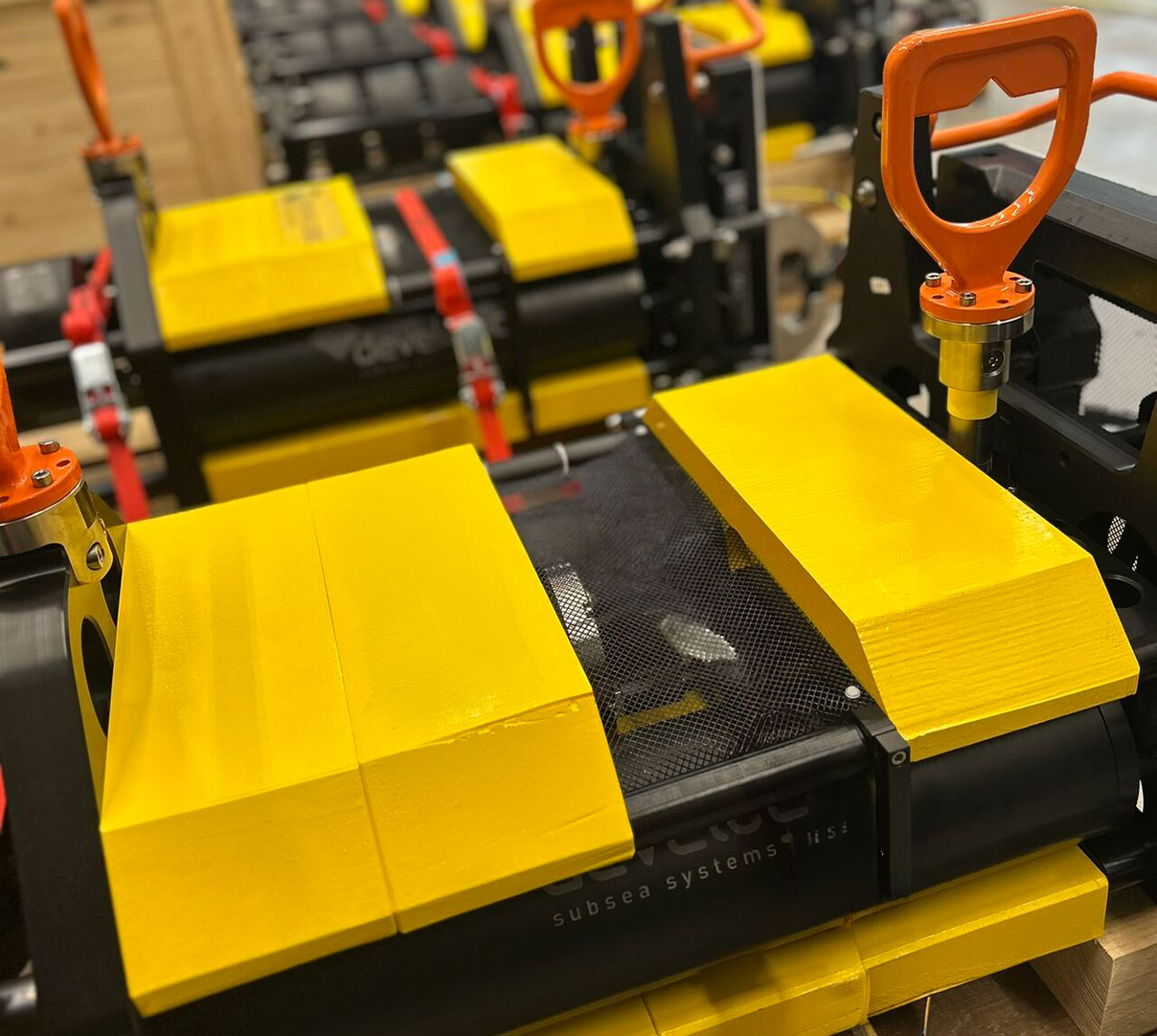
Develogic has confirmed the successful deployment of two Modular Seafloor Landers (MSLs) at depths exceeding five kilometres in the central Pacific Ocean, the deepest operational deployments in the company’s history, alongside delivery of seven Sonartransponders across two North Sea offshore wind farms, marking a significant expansion of its offshore energy monitoring portfolio.
The Pacific deployments confirm that free-fall installation remains viable beyond five kilometres of water depth, a milestone that extends the operational envelope of Develogic’s MSL platform and opens access to a class of seabed environments previously beyond reach for standard instrumentation approaches. The landers were deployed without ROV assistance, free falling to the seabed and touching down the correct way up. Both units are now operational, collecting data and transmitting results via acoustic telemetry to the surface.
The offshore wind programme involved the delivery and installation of seven wireless Sonar Transponders at two producing wind farms in the North Sea. The Develogic Sonartransponder is an acoustic collision warning system that provides underwater vehicles – including survey ROVs, inspection AUVs, and naval submarines with accurate positional data on fixed subsea infrastructure. It responds to predefined acoustic interrogation signals with standardised navigation warnings, enabling approaching vehicles to localise wind farm foundations, inter-array cables, and monopile structures in conditions of limited visibility.
This deployment introduced several technical advances over previous iterations. Electromagnetic (EM) communication across the water-to-air boundary – linking submerged transponders directly to topside infrastructure without acoustic relay – was implemented operationally for the first time in this configuration. Mounting systems were engineered to withstand storm loading equivalent to a 50-year return period event, meeting the structural requirements of permanent installation on operational offshore infrastructure. The project also included a refined installation methodology developed to reduce vessel time and diver exposure during deployment.
Both programmes demonstrate the breadth of environments in which Develogic systems now operate – from the abyssal depths of the Pacific Ocean to the shallow waters of the North Sea. Develogic’s modular engineering philosophy builds subsea systems from configurable, pressure-rated building blocks rather than fixed, single-purpose designs. The same core technologies; acoustic communications, pressure housing architecture and intelligent data management – scale seamlessly from scientific landers operating at depths of 5,000 metres to compact transponder systems supporting offshore wind farms in just 30 metres of water.
The offshore wind sector is entering a phase of rapid expansion in both capacity and geographic scope, with new farms being commissioned at greater distances from shore and in deeper water. The requirement for reliable subsea navigation infrastructure – capable of guiding the growing fleet of AUVs and ROVs operating in and around these sites – is a structural consequence of that expansion. Develogic’s Sonar Transponder programme, now with multiple operational installations across the North Sea, is designed to scale with it.
Further programme milestones, including environmental monitoring redeployments at floating offshore wind facilities in Norway and continued deep-sea operations in the Pacific, are ongoing.
Share:
Related articles
Gabler Group strengthens position in subsea communication and data with contract award from a European navy
Develogic acoustic recorders deployed in Japan’s EEZ to support deep-sea mining environmental assessment